



English: Writing, Reading & Oracy
At Braywick Court School, proficiency in reading, writing, and oracy is vital to the lifelong success of our pupils
English knowledge and skills are taught through an integrated approach where oral rehearsal feeds writing, high-quality literature fuels composition, and rich discussion deepens comprehension
Writing
At Braywick Court School, we don't just teach writing; we help children find their voice. Our vision is built on the simple truth that if a child cannot say it, they cannot write it. That’s why our classrooms are filled with talk, rehearsing sentences and debating vocabulary long before a pen touches paper.
We follow a clear, consistent writing journey.
Our pupils:
- Read like writers, using high-quality books as the "fuel" for their own ideas.
- Master the mechanics, practicing foundational skills until they are automatic, so the "boring stuff" doesn't get in the way of their creativity.
- Craft with purpose, learning that grammar isn't just a set of rules, but a toolkit for making an impact on their reader.
From the first marks in EYFS to the polished, published pieces, we want our pupils to be proud of their craft. We aim for every child to leave us as a confident, capable communicator who knows that their words have the power to shape their future.
The Five PIllars of Writing
|
Reading |
Oracy |
Transcription |
Composition |
Process |
|
High-quality writing is impossible without high-quality reading |
If a child cannot say it, they can’t write it. |
If handwriting and spelling aren’t automatic the writing will stall. |
High quality content and writing outcomes for a meaningful purpose. |
A clear writing journey is embedded and followed. |
Reading
At Braywick Court School, we don’t just teach children to read; we teach them to think, feel, and belong through reading
Our approach is built on three core truths
-
If a child can decode, they can access the text.
-
If a child understands what they read, they are truly reading.
-
If a child enjoys reading, they will choose to read again and again.
Our classrooms are rich with stories, discussion, explicit vocabulary instruction, and purposeful reading
The Five Pillars of Reading
|
Word Reading |
Language & Comprehension |
Reading Culture |
Oracy |
Text Immersion |
|
Reading begins with secure foundations. Fluent, automatic decoding unlocks access to meaning. |
Reading is understanding. Pupils construct meaning by connecting vocabulary, knowledge and ideas. |
Reading is both a skill and a habit. When children enjoy reading, they choose it, regularly and independently |
Talk deepens understanding. Through discussion, pupils clarify, justify and refine their thinking. |
We teach pupils how to read, not just what to read. High-quality texts are explored in depth so pupils learn how meaning is constructed. |
Oracy
Our core principle for writing and thinking is simple: If a child cannot say it, they cannot write it
-
Oral Rehearsal: Pupils test, refine, and rehearse their ideas and sentences using structured stems before picking up a pen
-
Active Dialogue: Staff foster an inclusive environment where all pupils actively participate in discussions, build on each other's ideas, and regularly practice verbalising their learning
-
Performance & Public Speaking: Children are given a wealth of opportunities across the curriculum and wider school life to develop their spoken language. From reading their own drafts aloud to "hear" punctuation and flow, to performing poetry, presenting speeches, and taking part in dramatic productions, pupils build expression, tone, and confidence in speaking before an audience
Phonics and Early Reading
Early reading is taught daily from Preschool to Year 2 through Monster Phonics, an award-winning, multi-sensory systematic synthetic phonics programme
All staff are fully trained in this approach, which brings learning to life using colour-coded graphemes and engaging monster characters to represent long vowel sounds, silent letters, and tricky spellings
By categorising the 44 English sounds into 10 monster-led groups and weaving in songs, games, and active practice, complex spelling patterns become memorable and fun
To ensure pupils read with early confidence, the decodable books sent home are strictly matched to the phonic sounds mastered in class
Decodable Reading Books
We have Monster Phonics books available in school and they are used during guided reading sessions and as take home books. The Monster Phonics books are fully decodable. This means that children can read them using just their phonics skills and knowledge.
The sounds in the book that children take home reflect the sequence of sounds taught in school meaning that your child should be able to read this text at around 90% accuracy and fluency. It is important that pupils are given the opportunity to re-read books many times to build up their fluency and confidence in word reading. Pupils also have access to the eBook library of previously read Monster Phonics books.
Assessment of Phonics and Early Reading
Regular and efficient monitoring of children’s development in phonics is essential if they are to become competent and confident readers, and subsequently writers. The Monster Phonics programme has a clearly mapped set of assessments which allows for checking children’s grapheme-phoneme correspondence (GPC), knowledge of High-Frequency Words (HFWs) and Common Exception Words (CEWs) for reading and writing.
The assessment schedule for Monster Phonics is broken down for each year group; Reception, Year One and Year Two. Each year group has a set of graphemes, CEWs and HFWs to be learnt and then assessed.
Pupils in Year 1 are well prepared for the Phonics Screening Check which takes place in the Summer Term.
Find out more about Monster Phonics
An Introduction to Monster Phonics
Supporting Your Child with Monster Phonics
Monster Phonics Tips for Parents
Year 3 to Year 6 - Reading
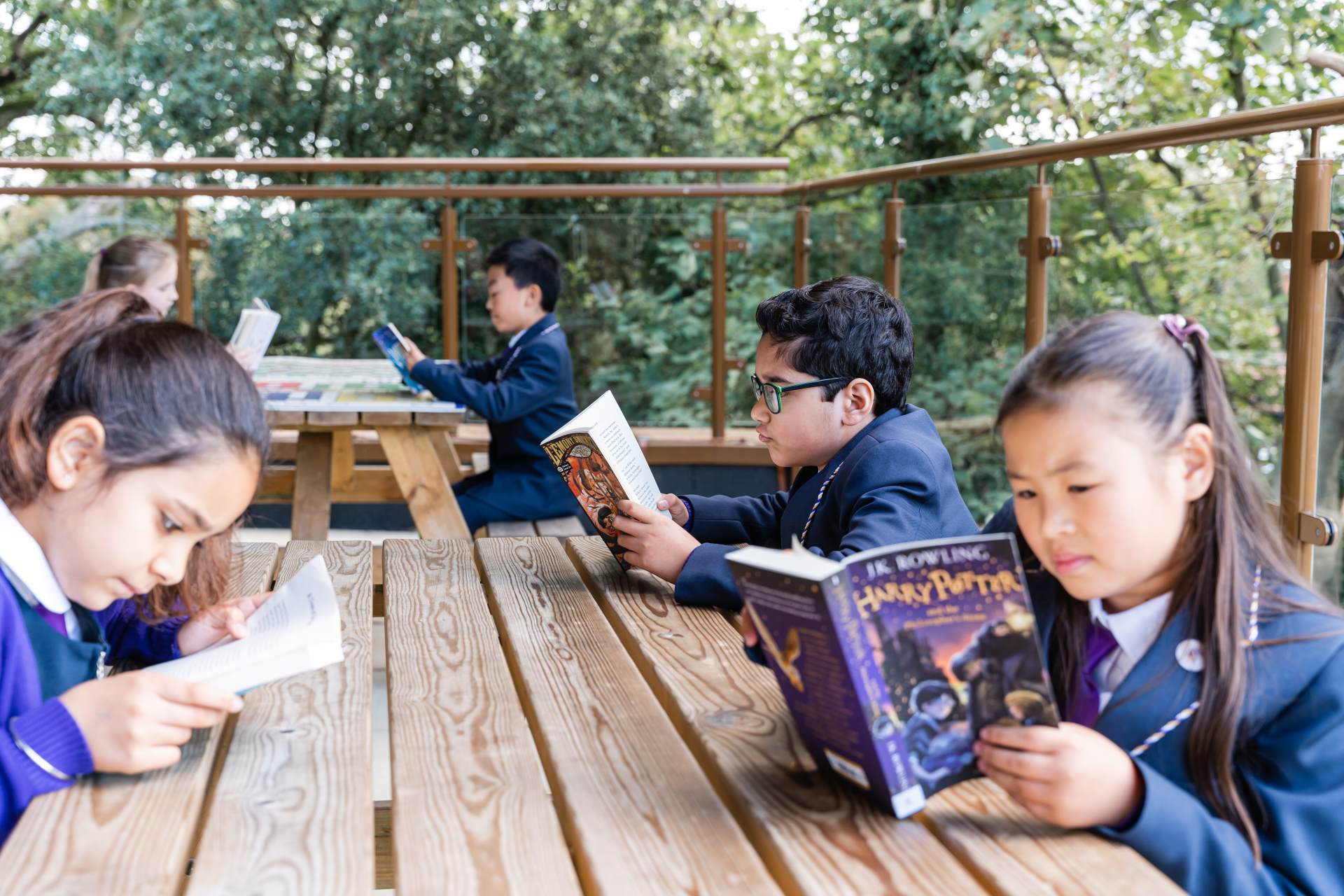
All children who attend Braywick Court School to leave us fully literate and with a life long love of books and reading.
Once our pupils have moved beyond phonics and early reading, they are explicitly taught through daily whole class reading lessons. Pupils from Year 2 to Year 6 have a dedicated 30 minute whole class reading lesson every day following the Master Readers approach.
Core texts have been chosen to complement the topics pupils are studying within the wider curriculum and also link to pupils writing in English lessons.
To further develop a love of reading, all teachers promote reading for pleasure by reading to their class every day.
Pupils in Key Stage 2 (from Year 3-6) follow the Oxford Reading Tree reading levels and have access to a wide range of genres of reading material, as well as the class and school libraries.